Will Kodak Vision3 AHU film replace Cinestill?
Will the new Kodak Vision3 AHU film mean the end for Cinestill? I cover Kodak Vision3 50D vs Cinestill 50D, Kodak Vision3 250D vs Cinestill 400D, Kodak Vision3 500T vs Cinestill 800T plus give a mention to related film names Amber T800, Flic Films and developing Vision3 film at home.


First time here? Get your Perks!
Kodak develops a new film (well kind of)
It’s reported to have been 8 years in the making but Kodak finally made a revised version of their famous Kodak Vision3 films. The film emulsion remains the same so you can interchange the older Vision3 films with the new AHU Vision3 films. All that they changed was the anti-static/ halation layer – Remjet was replaced with their new “AHU” coating.
New Kodak Vision3 AHU films
In 2025, Kodak announced their new Kodak Vision3 AHU films. This new anti-halation undercoat “AHU” layer would replace Remjet, their black, carbon-based, anti-halation/ anti-static coating on the back of Kodak Vision3 motion picture films.
In the past the Remjet layer was added to film emulsions to protect film from scratches, static discharge, and light reflection in high-speed movie cameras. The new anti-halation undercoat does the same job but means the film no longer has all the drawbacks associated with Remjet.
Take a minute
To fully appreciate the new Kodak Vision3 AHU films let’s quickly step back and discuss Remjet and the issues it causes with film developing. (Then we’ll get back to the new films and Kodak Vision3 vs Cinestill).


The problem with Kodak Vision3 Remjet
Historically, all Kodak Vision3 50D, 250D, 200T, 800T films had the black carbon Remjet layer. These ECN-2 films were not useful to most still photographers because of the Remjet. Why? You can’t just take Kodak movie film to your regular lab for C-41 processing as the Remjet contaminates the C-41 chemistry.
The only options were to find a lab that offered ECN-2 developing (very rare 10 years ago) or develop the film yourself (as I did). The problem is most photographers just assume all colour film is “normal” film (C-41) that they can take to the lab.
How can you tell if a film is safe for lab development? Normally film labels say C-41 developing or ECN-2 (in this example) ..or E6 if it’s slide film.
Remjet warning signs
If you don’t read labels this is what to look out for. If you ever buy an unknown film brand and the film has a black coating on 1 side, this is likely Remjet and respooled Kodak Vision3 film. Only shoot the film if you have a way to process ECN-2 film (or you plan to develop the film yourself and know how to remove the Remjet layer).
You will commonly see this black coating on respooled film from the likes of Analog Revival (more on them later!) or Flic Films, but labels should always clearly state whether it’s ECN-2 or not.
How to develop ECN-2 films with Remjet
If you have old ECN-2 film in your fridge with the black coating you have two options when it comes to film developing. First is to post your film to a lab that specifically offers ECN-2 film developing. Thankfully now more common since the film resurgence in recent years.
Second is to develop the ECN-2 film yourself at home. This means removing the Remjet layer prior to the normal developing sequence.

Remjet gets everywhere
If you’ve ever tried developing motion picture film yourself you’ll know the Remjet gets everywhere. It stains your film tank reels and just seems to coat everything it touches with that black gunk. What I struggled with the most in the past was to get the remaining residue off my film negatives meaning once they dried they often had unwanted white residue marks on them.
To see how I develop film at home (including motion picture) film read the following paragraphs (and linked articles). My main jump forward this time around (after a prolonged break from colour film) is I now add multiple water bath steps at the end to minimise residue before hanging the film to dry.
Improving my movie film developing
In the past I followed the usual Develop – Fix – Rinse approach when it came to developing Kodak movie film in C41 chemistry (cross-processing*). After learning the hard way, I now remove movie film from the reels after the bleach/ fix and add extra water rinses to minimise residue.
My added step is to squeegee the film through my fingers in warm water baths (several) to remove any remaining unseen black Remjet residue. You’ll see the water turn black as the last of the Remjet gets wiped off. Once the water runs clear I apply the standard rinse before drying. (Top tip, doing this in a white container helps see if the water is truly clear after the last rinse).

Cleaner negatives (no residue)
The result of more rinsing is cleaner negatives and a much happier photographer. In past years I lost many images purely because I didn’t want to spend an hour in Photoshop trying to edit away the remaining Remjet residue marks (like heavy water marks). Now my film scans are mostly clean and I can use most of them.

How I develop C41 film at home
If you’ve never developed colour film at home it’s super simple. I’ve written detailed articles in the past sharing my process and photos. I can link them below.
All that has changed is I now use Cinestill CS41 Colour Simplified powder mix (1L) rather than Tetenal Colortec C-41 kit liquid developer. Everything else is pretty much the same (and just as easy!)
Developing Kodak Vision3 film at home
When it comes to developing Kodak Vision3 film at home, as I am cross processing the film with C41 chemistry it’s similar to developing standard colour negative film, except adding an extra step at the start. First you need to remove the Remjet layer so to do this I do a pre-soak and rinse (see article below).
I also now add the mentioned extra rinse cycle afterwards to remove any remaining residue.
New Kodak Vision3 film and what it means
OK, back on track.
So now we understand what a pain the former Remjet layer was, we can truly appreciate having the same amazing films without it. How will this impact companies like Cinestill? I guess we should first explain the link between Kodak Vision3 and Cinestill.
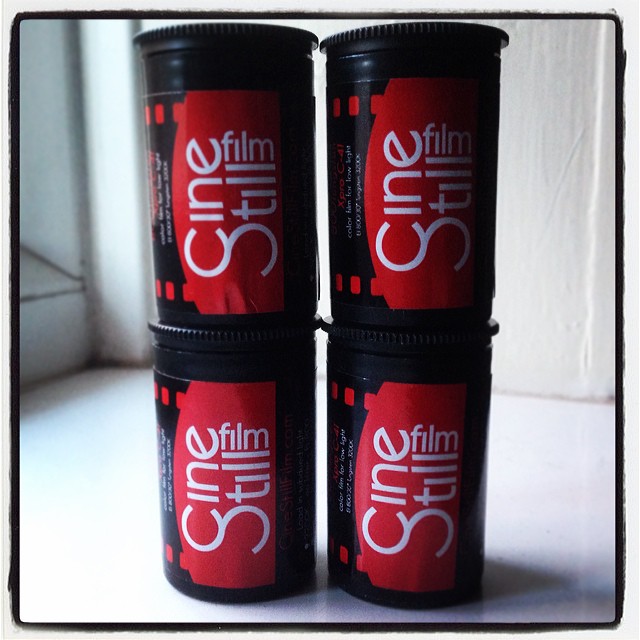
Who are Cinestill (What’s the connection?)
The name Cinestill first became famous when they introduced their first film stock, Cinestill 800T. The Brothers Wright recognised the “issue” photographers faced with Kodak Vision3 film and what a pain Remjet was.
Cinestill set about making standard Kodak Motion Picture film available to photographers with two key changes. First, the Remjet layer was removed (for easier developing including standard film labs) and second, it came pre-spooled into 35mm canisters ready to use (rather than having to bulk load it from 400ft master rolls as used by the movie industry).
After setting up a facility and a kick starter project, Cinestill came to market with their first film, 35mm Cinestill 800T. (Fun fact, I was a beta tester of the first Cinestill films and I used to chat to the Brothers Wright on Facebook before they hit the big time).
Cinestill 800T (respooled Kodak Vision3 500T) was a huge success with film photographers so they replicated the business model with more Vision3 films. Next came Cinestill 50D (Kodak Vision3 50D), Cinestill XX (Kodak Double-X 5222) and Cinestill 400D (Kodak Vision3 250D), all in multiple formats together with a full ecosystem of chemistry and film developing kit. The only Vision3 film Cinestill has not rebranded is Kodak Vision3 200T.
Easy access Kodak Vision3 films were a big hit with stills photographers but there was a lot of negative press around the Cinestill brand too. (I won’t get side tracked by that in this article and will stick to the products).
The main drawback of Cinestill films vs the original Kodak Vision3 film stocks is Cinestill priced their version with a premium price tag (for the convenience). I’m not sure of the exact price hike but let’s say 15-20% higher as a rough estimate, which adds up if you shoot a lot of film. This will be important to note when we consider the new Kodak Vision3 AHU films.
Cinestill 800T vs Kodak Vision3 500T
So is Cinestill 800T the same film as Kodak Vision3 500T? Yes and no. Cinestill 800T uses the same Kodak Vision3 500T film stock but they remove the Remjet layer. Removing the Remjet is what results in the famous Cinestill halation effect and is perhaps the reason people love Cinestill 800T. See the example photo below –

What about Kodak Vision3 500T AHU?
Now that Kodak has released the Kodak Vision3 500T AHU is this the same as Cinestill 800T? Sadly not. The Cinestill process used to remove Remjet is what causes the magic halation effect. The new AHU film looks identical to the old Vision3 films that had Remjet on, just without the Remjet. Vision3 films don’t have the halation effect.
Will Cinestill loose their film supply?
The future for Cinestill now seems uncertain to me. Their former success revolved around a process to remove Remjet which gave the signature Cinestill halation look. Kodak supplied Cinestill with Remjet films and that was the business model (as I understand it).
If Kodak has discontinued all their former Kodak Vision3 films (with Remjet) and now only manufactures Kodak Vision3 AHU film can Cinestill still get the same halation look by removing the AHU layer? Will Kodak keep making Remjet coated films specifically for Cinestill? Did Cinestill order a large quantity of the older Remjet film stocks which will eventually run out? Lots of unanswered questions.


Cinestill vs Kodak Vision3 AHU
So from my test results it clear that Kodak Vision3 500T AHU cannot replicate the look of Cinestill 800T when used in a mixed light environment (for the halation aspect specifically). What about other Cinestill film stocks? Will sales get negatively impacted by the new Kodak AHU films? I think yes and I’ll explain why for each film stock.
Cinestill 50D vs Kodak Vision3 50D AHU
Cinestill 50D is Kodak Vision3 50D with the Remjet removed. 50D is a daylight balanced film stock so normally shot in daylight but you can still get the Cinestill halation effect from points of light.
Unless you shoot Cinestill 50D for long exposure shots in low light to get the special halation effect, I see no reason to buy this film once Kodak Vision3 50D AHU becomes more readily available (from respoolers such as Flic Film and Analog Revival).
In normal daylight scenarios (common for shooting ISO 50 film) you won’t see any benefit of paying extra for Cinestill 50D now that you can lab develop Kodak Vision3 50D AHU (in C-41 or ECN-2 chemistry). Respooled movie film is normally priced competitively so it would be cheaper for most photographers to switch to Kodak (or rebadged versions of). I’ll include a price comparison and where to buy there films at the end.

Will Kodak make 120 rolls of Kodak Vision3 AHU?
One current advantage of buying Cinestill films is they offer their film in multiple formats, 35mm, 120 and sheet film. To my knowledge Kodak doesn’t currently sell Kodak Vision3 AHU films in 120 rolls or sheets so if you shoot a Hasselblad 501c, Mamiya RZ67 or 645 or similar, then Cinestill is currently your only option for these film stocks.
How good is 120 Cinestill 50D?
If you love the fine details captured from 35mm Kodak Cinestill 50D you should try their 120 Cinestill 50D. Bigger negatives means even more details. Perhaps overkill for my portraits but beautiful for detailed landscapes or cityscapes.


Kodak Portra 160 vs Cinestill 50D?
If you currently shoot Kodak Portra film and are interested to see how Cinestill 50D compares for portraits check out my Cinestill 50D vs Kodak Portra 160 article. Linked below plus a few sample portraits shooting Cinestill 50D for my model photoshoots.


Kodak Vision3 50D example photos
After discovering Kodak Vision3 50D soon after getting a few rolls of Cinestill 50D I never really went back. I was happy with my Kodak Vision3 50D for daytime portraits (especially suited to use with fast lenses like a Leica Noctilux 50mm f1). I will happily use Kodak Vision3 50D AHU going forward and it will be nice to have the option of C-41 lab developing if I’m not developing it myself at home.


Cinestill 400D vs Kodak Vision3 250D
One film I’ve still never shot is Cinestill 400D. Like the other rebadged films it’s just Kodak Vision3 without Remjet, in this instance, Kodak Vision3 250D. I feel Cinestill 400D 35mm sale sales will soon suffer as a result of the new Kodak Vision3 250D AHU as most people likely shoot Cinestill 400D in daylight.
The only real reason to pay a premium for Cinestill 400D is if you shoot in blue hour and want to get the Cinestill halation effect (or to buy 120 rolls or sheet film as Kodak don’t offer this). For everything else just buy Kodak Vision3 250D and enjoy the cheaper price tag. The colours are beautiful from 250D and if you want one Vision3 film to start with perhaps try this first.
Kodak Vision3 250D vs Kodak Portra
Thanks to the amazing colours, I really think that is Kodak Vision3 250D AHU will impact sales of Kodak Portra 160 and Kodak Portra 400 once it’s more readily available. For photographers in the know at least. Perhaps I’m wrong but I will always pick 250D over Portra as I just love the look. Here are a few examples of Kodak Vision3 250D shot in Brighton with a Leica MD-2.


Cinestill 800T vs Kodak Vision3 500T AHU
We’ve discussed this above so I’ll keep it brief here. I think Cinestill 800T won’t be replaced by Kodak Vision3 500T AHU thanks to its unique halation look, and the fact that many people buy Cinestill 800T for that reason. If you are a rarity and perhaps bought Cinestill 800T to shoot in daylight, then yes you can now switch over to Kodak Vision3 500T AHU and save some cash.
35mm Cinestill 800T
When Cinestill 800T first came to market I shot it quite a bit. It was exciting to have an ISO 800 speed film to use for low light portraits in hotels during the winter months. Here are a few examples and link below to more images in the Cinestill 800T article.


Cinestill 800T daylight portraits
Before I learnt to develop my own colour film (and found access to Kodak Vision3 films) I used to shoot Cinestill 800T in all conditions include for daytime portraits. As a model photographer having one film stock that could do “anything’ was amazing for me. See some example photos below plus many more in the linked article.
Kodak Vision3 500T portraits
So we’ve seen examples of Cinestill 800T for portraits. What about shooting Kodak Vision3 500T for portraits in daylight? See some example film scans below plus the linked article where I shot Kodak Vision3 500T as my chosen film stock when doing a head to head camera shootout test – Leica R6 vs Nikon FE2.


120 Cinestill 800T
As with 120 Cinestill 50D and 400D, as there is no 120 Kodak Vision3 500T option if you want to shoot larger formats, Cinestill 800T is the only option. I’ve shot 120 format 800T in both my Hasselblad and 4×5 cameras (via a 120 roll film back). Here are a few samples.


What about Kodak Vision3 200T?
Kodak manufactures four Vision3 film stocks. 50D, 250D and 500T we’ve already mentioned and all of these have been selected by Cinestill for resale. What about Kodak Vision3 200T?
If you want to try something a bit different try to get yourself some Kodak Vision3 200T. I bought a 200ft short end master roll of the Remjet version and then rolled my own film (aka. bulk loading). The look of Vision3 200T is similar to Kodak Vision3 500T but finer grain. Both are tungsten balanced films as the name suggests so you’ll have to colour correct your film scans for daylight photography (or add an 85B filter during shooting but that cuts one stop of light).
Kodak Vision3 200T portraits
Below are some Kodak Vision3 200T portraits to give you an idea of how the film performs.


Bulk loading Kodak Vision3 AHU
If you shoot a lot of colour film, the most economical approach is still likely to buy a 400ft master roll of fresh Kodak Vision3 AHU film and then bulk load your own film onto 35mm cassettes. This was my approach for the last decade with the Remjet films and you can see my how in the bulk loading article below.
Amber T800 film
A new-to-me film is Amber T800 that was gifted by one of my Leica workshop students. At first glance it seems to be rebadged Cinestill 800T. Both are tungsten balanced 35mm films without Remjet. Both ISO 800. The main difference is Amber T800 is sold as 27 exposure rolls whereas 35mm Cinestill 800T is the standard 36 exposure rolls.
I was interested to shoot the two films side by side. See the YouTube video linked below which includes this comparison and other films mentioned in this article.
Amber T800 vs Cinestill 800T
What is Amber T800 film?
What appeared to be rebadged Cinestill 800T (Kodak Vision3 500T) at first, seems to be a slower speed stock once I developed it. Amber T800 appears to be at least one stop slower than the Cinestill 800T film with higher contrast and more apparent grain. Amber T800 also has a cooler colour cast which I like.
If Cinestill 800T is Kodak Vision3 500T then perhaps Amber T800 is Kodak Vision3 200T? See a few sample photos below. (After more digging it appears that Amber T800 is in fact Kodak Vision3 500T like Cinestill 800T, it just has a look of a slower film).


Is Lomography 800 the same as Kodak Vision3 500T?
Another rebadged 800 speed colour film that is likely Kodak stock is Lomography 800 film. Is this also Kodak Vision3 film? The answer is no as Lomography 800 is daylight balanced and doesn’t have a Remjet layer. Rumours suggest Lomography 800 is a Kodak film and perhaps a Pro Image or Ultramax 800 speed variant. I remember the sudden Lomography film price jump when Kodak increased its own prices so I’m pretty sure they are linked.
Lomography 800 film
If you’ll looking for an 800 speed colour film that is a cheaper alternative to Cinestill 800T (and Portra 800) check out Lomography 800. Available in both 35mm and 120. See a few sample images below and more in the linked Lomography 800 review.


Silbersalz35 – My first experience with ECN-2
My first experience with ECN-2 film negatives was when I ordered 2 multi-packs of Silbersalz35 film. This is rebadged Kodak Motion Picture film as discussed above but with the difference that their business model included film + developing + scans.
I ordered 2x 50D, 2x 200T, 2x 250D and 2x 500T and then instead of my usual C-41 cross processing Silbersalz processed the negatives in ECN-2 chemistry. The Leicaflex SL video below shares lots of the ECN-2 film scans from these rolls.


The end of Silbersalz35?
One possible victim of the new Kodak Vision3 AHU films is Silbersalz. The Silbersalz primary business model was to respool Kodak Vision3 Remjet films from the original 400ft or 1000ft rolls into 35mm canisters and then offer a film + developing postal service. Rather than cross processing ECN-2 Remjet films at home in C-41 chemistry like I was doing, you could send the film back to them for native ECN-2 developing and then they send you the film scans electronically.
Rumours online suggest that Silbersalz will be shutting down now that customers can buy Kodak Motion Picture film from online respoolers and just take the film their local lab for C-41 developing (or even ECN-2 developing which has become more popular again with some specialist labs).

ECN-2 vs C-41 developing for Vision3 films
One question you may have – What is the impact of cross processing ECN-2 Kodak Vision3 films in C-41 chemistry compared to developing with native ECN-2 chemicals? For reference if you develop ECN-2 film like Vision3 films in C-41 chemicals is called cross processing.
ECN-2 films were originally designed by Kodak to have a huge dynamic range (13-15 stops in total) to retain maximum details in difficult lighting situations. You only achieve this performance if you develop ECN-2 films in ECN-2 chemistry. The resulting negatives can look flat and a little underwhelming but all the details are there. I find I need to re-process these negatives through Lightroom to add back the necessary contrast and saturation (to get images similar to how I remember the scene).
In contrast, if I develop ECN-2 films like Vision3 in standard C-41 film developer I get near “ready to post” images straight off the scanner (with often very little processing required). C41 developing means you don’t capture quite the same exceptional dynamic range but film negatives have increased contrast and saturation baked in.
As I would have to add this look in post anyway I’m happy to cross-process my ECN-2 films in with C-41 films. (Refer to my article shared above on my film developing approach).

My first roll of Kodak Vision3 AHU
If you’ve not watched the linked YouTube video above, you might wonder where I first found Kodak Vision3 AHU film for sale? I was in Budapest for photoshoots and I stopped by at Cafe Analog. They had the new Kodak Vision3 AHU film respooled in 35mm cassettes for sale labelled as their Kino film.
Cafe Analog had two options available, Kino 500T (Kodak Vision3 500T AHU) and Kino 250D (Kodak Vision3 250D AHU). I wanted to do a mass 500T shootout for YouTube so I bought a roll of their Kino 500T film. Their Kino film prices included free ECN-2 film developing so this is great value. Recommended if you’re ever visiting Budapest and need film. Say hi for me!

Where to buy Kodak Vision3 AHU film in the UK
If you’re UK based I have good news. Around 3-4 months after my Budapest trip I discovered that I can now buy Kodak Vision3 AHU films here in the UK. Specifically the same two stocks as I found in Budapest – 500T and 250D, sold by Analog Revival. (Note for black and white film I buy Kodak Double-X from Analogue Cameras in the UK).
Analog Revival Vision3 AHU films
After searching online I found that Analog Revival are now stocking the new Kodak Vision 3 500T AHU and Kodak Vision3 205D AHU films (in addition to the Remjet versions of 50D and 200T). Perhaps 50D AHU will be next so check their website for updates. Note – they offer a massive range of unusual film stocks so definitely worth a look. They even had some Kodak Plus-X listed! (If you know you know – it’s good!)

Point and shoot cameras and colour film
As mostly a black and white photographer shooting with different Leica cameras but also medium format, occasional large format and other brands, I just bought myself another point and shoot film camera (after selling my Contax T2 some years ago).
As a kid that grew up in the 1980s I remember film from the first time around. When I think of old family photos they were all colour film (including slide film), often with flash and shot on a basic point and shoot compact camera. (My parents were not into photography so I definitely didn’t grow up in a Leica household. We had an Olympus Trip MD if I remember well).
As a teenager in the 1990s I had some sort of cheap film camera (or disposable film camera) that I took to parties and on holiday. I just remember all the out of focus images from being too close to the subject (or the thing being so far away it was too small to see!)
I only mention this as I just bought a Yashica T3 film camera as an affordable alternative to my Contax T2. I tried shooting black and white film and the photos look nice but they lack that nostalgia feel from a combination of colour film + flash.
Despite my love for black and white I need to buy some fresh colour film to feed my Yashica T3. Thanks to the new AHU films the timing is perfect. My plan is to shoot colour film with this and black and white in my Leica cameras.
My colour film choice for 2026
As a photographer that prefers the look of Kodak Motion Picture films to consumer film stocks (the likes of Kodak Portra 400 or budget options), I’m interested in Kodak Vision3 AHU films specifically (to cross process at home with a C-41 developing kit). Currently this means I only have two options – Kodak Vision3 500T AHU or 250D AHU.

Kodak Vision3 500T vs 250D (for daylight)
Unlike the “old days” I now digitise my film negatives using a Leica camera + Valoi Easy35 scanner (see video below). This means rather than having to use an 85B warming filter on Vision3 500T (when shooting in daylight) I can just colour correct in post.
As Kodak Vision3 500T AHU is a tungsten balanced film you generally give the film more light when shooting in daylight. Perhaps 1 stop for simple maths so 500T @ ISO 250. That means I could just use Kodak Vision3 250D AHU instead which is native ISO 250. For those that prefer natural “clean” colours out of camera then Vision3 250D is for you. If you want more cinematic/ less accurate colours then perhaps consider 500T AHU instead.

Why I use Kodak Vision3 500T AHU for daylight
With that in mind, I just reached out to Analog Revival and ordered myself a pile of fresh Kodak Vision3 500T AHU film, specifically to shoot with my point and shoot cameras (originally the Yashica T3 but now a Yashica T4)(See that article, I explain).
I have an overseas trip coming up so that’s my colour film setup and I’ll be sure to add some new photos below once developed and scanned. (Subscribe for the future Yashica T4 article where i’ll share plenty more Vision3 500T AHU photos).

Cheapest colour film in the UK 2026
To quickly mention prices, all film has got a lot more expensive over the last 5-10 years and no film is cheap nowadays but some are better value than others. To finish let’s compare a few Kodak-based film stocks for a price comparison (35mm, 36exp) –
- Kodak Portra 400 ~£20 (£99 for 5-pack)
- Kodak Gold 200 ~£11 (3-pack can be cheaper)
- Lomography 400 ~14 (£44 for 3-pack)
- Cinestill 800T ~£18
- Kodak Vision3 500T AHU – £8.99 (Analog Revival)
- Kodak Vision3 500T AHU – £8.99 (Analog Revival)
- Kodak Vision3 200T – £6.99 (Analog Revival)
- Kodak Vision3 50D – £6.99 (Analog Revival)
*I went for Kodak Vision3 500T AHU over the cheaper 200T (with Remjet) in hope to create cleaner negatives for scanning (and a much faster less hassle workflow). Note – I’m not affiliated with Analog Revival, I’m just trying to give them some love. Please say hi for me if you buy via my links!

Stay updated on the latest Leica news
Add your email to receive the free Leica newsletter and follow on YouTube for future videos. To support my work consider joining Patreon or visit my Print Store and hope to meet you at one of my Leica Workshops.


My local lab is still quite wary oh AHU films and mentioned they wouldn’t be comfortable using the same developing machine for both regular C-41 and AHU film stocks – the new layer might be transparent, but it’ll still contaminate development chemicals. At least, that’s the fear at the moment. Maybe it’ll turn out to be unsubstantiated, but I’d imagine labs will tread carefully until experience points either way.
Thanks for sharing, interesting. I think it’s just lab techs learning about the new film, it should work like any C41 film in that way otherwise they wouldn’t spend 8yrs making it.